Nut-Free vs. "Made in a Nut-Free Facility": What Parents Need to Know
Not all nut-free labels are equal. Here's the difference between a nut-free recipe, shared equipment, and a dedicated nut-free facility — and why it matters for a food-allergic child.
If your family manages a peanut or tree-nut allergy, you’ve learned to read labels like a detective. But one distinction confuses even seasoned allergy parents — and it’s the one that matters most: the difference between a product that’s nut-free by recipe and one that’s made in a dedicated nut-free facility.
Getting this right is the difference between “probably fine” and “genuinely safe.”
The three levels of “nut-free”
Not every nut-free claim carries the same weight. Here’s how to rank them:
- No nuts in the ingredients. The recipe contains no peanuts or tree nuts — but the label says nothing about how or where it was made.
- Made on shared equipment. Nuts are used elsewhere in the facility, often on the same lines. You’ll see advisory labels like “may contain tree nuts” or “processed in a facility that also processes peanuts.”
- Made in a dedicated nut-free facility. No nuts enter the building. There’s no shared equipment and no cross-contact pathway.
For a child with a serious nut allergy — and for a nut-free classroom — only the third level truly clears the bar.
What is cross-contact, exactly?
Cross-contact happens when a nut protein transfers to a food that doesn’t contain nuts as an ingredient. It can come from shared mixing equipment, conveyor belts, dust in the air, or even gloves and utensils. You can’t see it, taste it, or wash it off — and for a highly allergic person, trace amounts can be enough to trigger a reaction.
That’s why “may contain” warnings exist. They’re voluntary in the U.S., but when a manufacturer includes one, take it seriously.
A nut-free ingredient list tells you what’s in the recipe. A nut-free facility tells you what could have touched it on the way to the package. For allergy safety, you want both.
Why the facility is the real safeguard
A dedicated nut-free facility removes the cross-contact question entirely. There are no nuts on-site to transfer, no shared lines to clean between runs, and no advisory label needed. It’s the manufacturing equivalent of never bringing the allergen into your home in the first place.
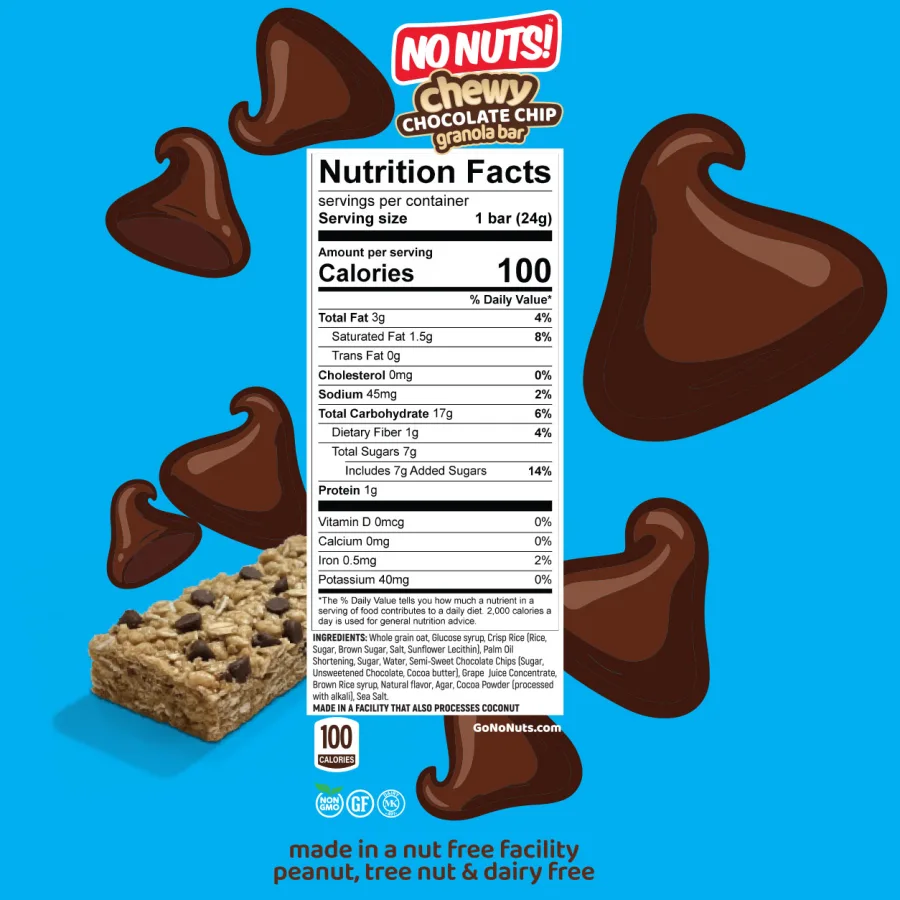
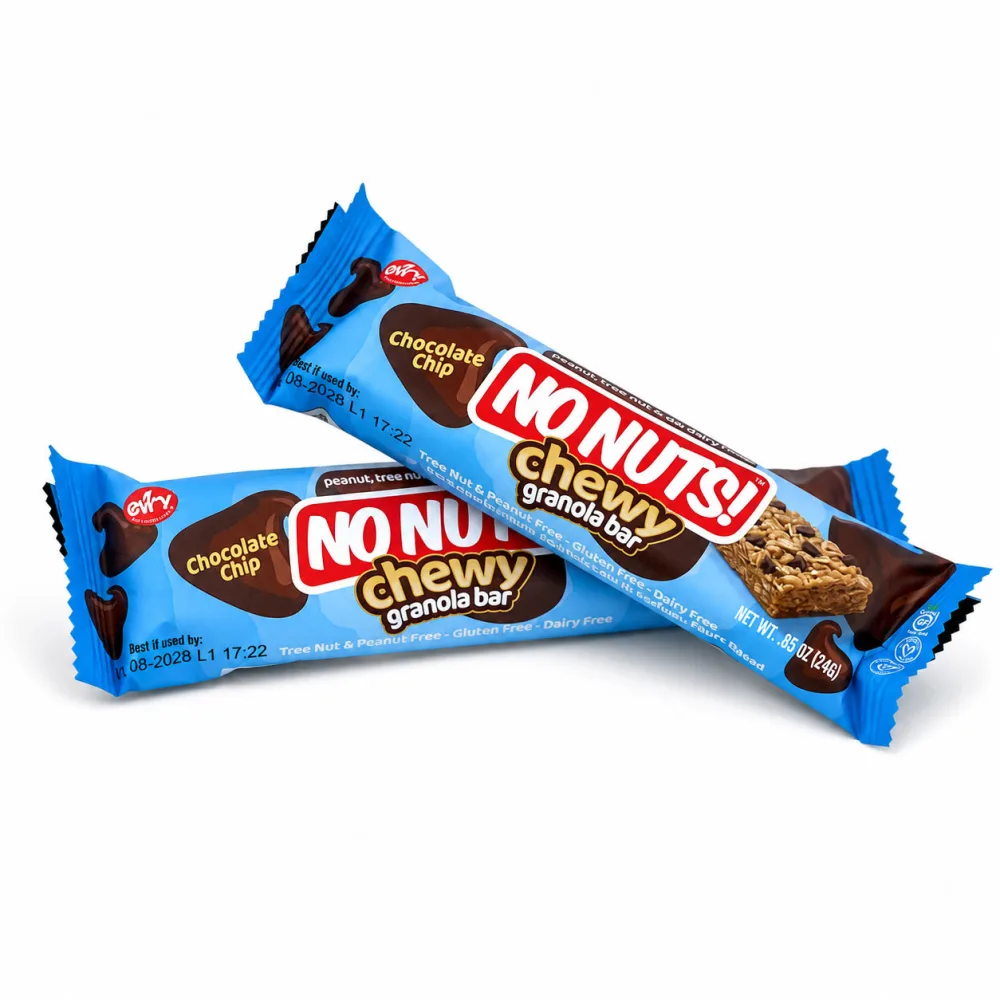
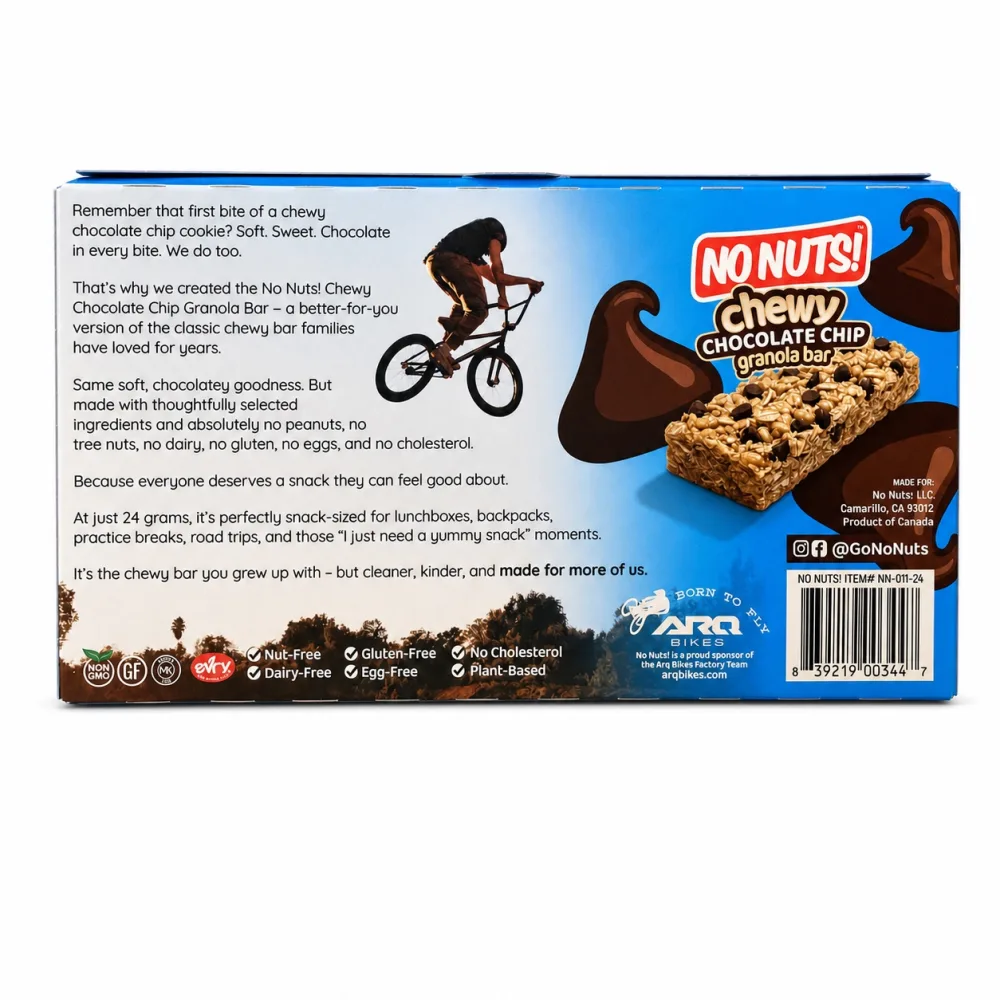
Every No Nuts! product is made this way — in a 100% nut-free facility, not on shared equipment. Our new Chewy Chocolate Chip Snack Bar goes a step further and is free from all nine major U.S. allergens, which is why it’s a confident choice for lunchboxes and classrooms.
A quick checklist for the grocery aisle
- Read the “Contains” statement first — it flags major allergens fast.
- Look for a facility statement, not just a clean ingredient list.
- Treat “may contain” and “shared equipment” as a no for a highly allergic child.
- When a brand is transparent about a dedicated nut-free facility, that’s your green light.
The takeaway
“Nut-free” is a spectrum, not a guarantee. The single most useful habit you can build is checking where a food is made, not just what’s in it. Once you start reading for the facility, the safe choices get a lot easier to spot — and a lot less stressful to trust.
Want to skip the detective work? Browse our full lineup — every bar is made in a 100% nut-free facility. And if you’re new to classroom allergy rules, our School-Safe Snacks guide breaks down exactly what schools look for.