How to Read a Food Allergy Label (Without the Anxiety)
A calm, step-by-step method for reading allergen labels fast — what the 'Contains' line means, how to spot cross-contact warnings, and the FASTER acronym worth memorizing.
For anyone new to managing a food allergy, the label aisle can feel like a minefield. But reading an allergen label well is a skill — and once you know where to look, you can clear most products in about fifteen seconds. Here’s the method.
First, know the “big nine”
U.S. law requires manufacturers to clearly identify the major food allergens. As of 2023, there are nine:
- Milk
- Eggs
- Fish
- Crustacean shellfish
- Tree nuts
- Peanuts
- Wheat
- Soybeans
- Sesame (added in 2023)
These must be declared in plain language, which is what makes the “Contains” line so useful.
Step 1: Read the “Contains” statement first
Skip straight to the bold “Contains:” line, usually just below the ingredient list. It summarizes the major allergens in the product in plain words — “Contains: milk, wheat, soy.” If your child’s allergen is listed, you’re done; put it back. This one line does most of the work.
Step 2: Scan for a facility or cross-contact warning
Next, look for an advisory statement:
- “May contain tree nuts”
- “Processed in a facility that also processes peanuts”
- “Made on shared equipment with…”
These warnings are voluntary in the U.S., so their absence doesn’t guarantee safety — but their presence is a clear signal to avoid the product for a highly allergic person. The opposite is also true: a statement like “made in a dedicated nut-free facility” is a strong green light. (More on why the facility matters in our guide to nut-free vs. nut-free facilities.)
Step 3: Read the full ingredient list for your specific allergens
The “Contains” line covers the big nine, but if your child reacts to something outside that list — say, a specific legume, seed, or additive — you’ll need to read the full ingredient panel. Watch for alternate names, too (whey and casein are milk; semolina is wheat).
A quick memory aid — FASTER: Find the Contains line, Advisory warnings next, Scan full ingredients, Tricky alternate names, Every time (formulas change), Recheck on repurchase.
Step 4: Re-check on every purchase
Manufacturers reformulate. A product that was safe last month can change suppliers, add an ingredient, or move production lines. Build the habit of re-reading the label each time you buy — especially if the packaging looks even slightly different.
When you want to skip the detective work
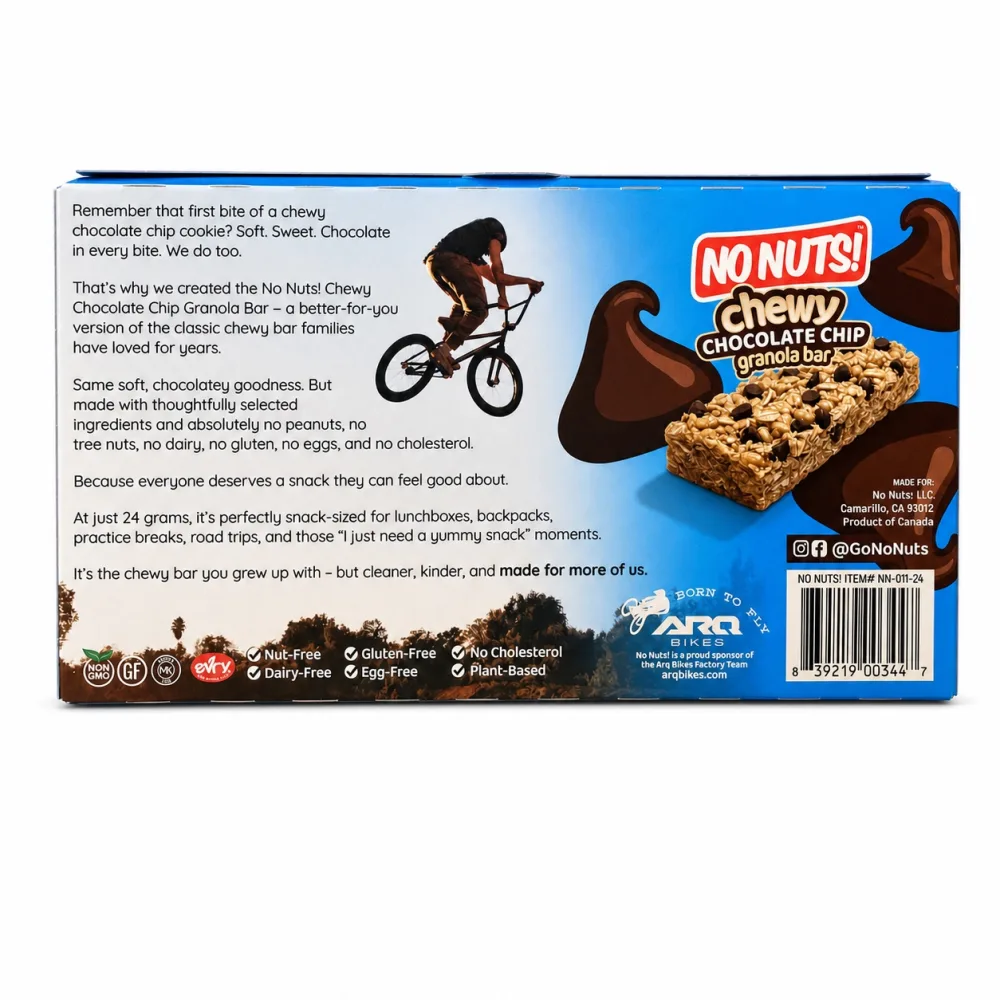
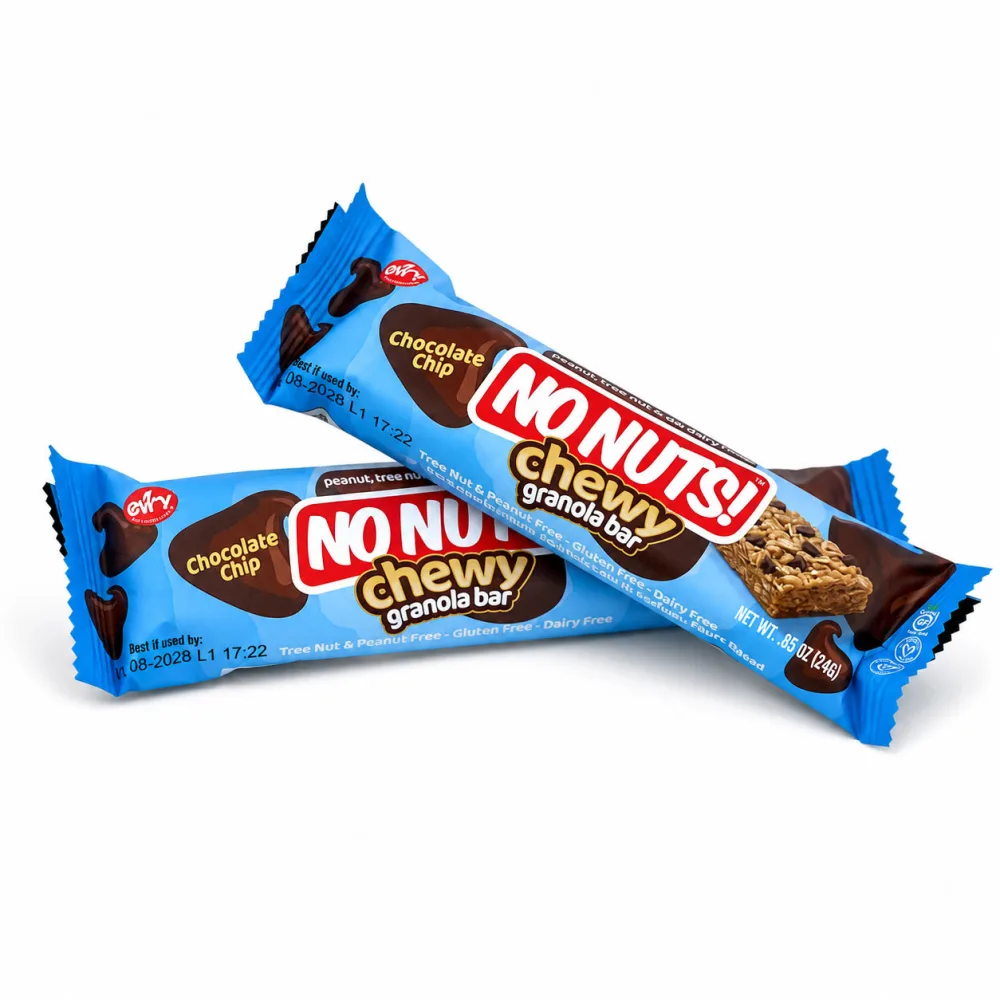
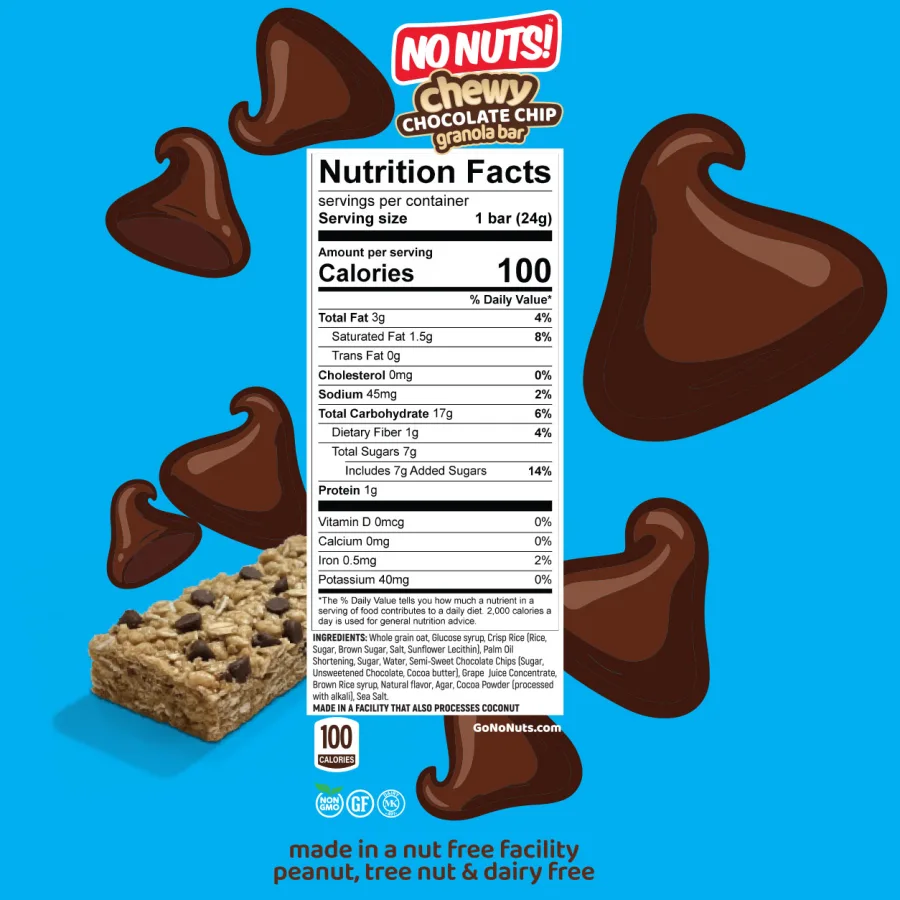
The fastest label to trust is a short, transparent one from a brand that’s clear about its facility. Every No Nuts! bar is made in a 100% nut-free facility, and our Chewy Chocolate Chip Snack Bar is free from all nine major U.S. allergens — the kind of label that takes about three seconds to clear.
Reading labels well won’t ever be glamorous, but it stops being scary once it’s a routine. Find the Contains line, respect the advisory warnings, and re-check every time — that’s most of the game.